
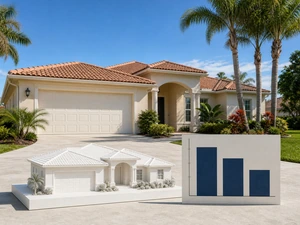
Florida Voters Approve a Major New Homestead Tax Exemption
Laura Bennett
Updated Nov 7, 2026
Florida voters approved a constitutional amendment that will dramatically expand the homestead exemption for many primary-residence owners, raising the exemption for non-school property taxes to $150,000 in 2027 and $250,000 in 2028. Amendment 3 cleared Florida’s 60% approval threshold in the November 3 election, according to unofficial results and local reporting. Its effect is a reduction in taxable assessed value, not a direct cash payment to every homeowner.
With nearly all precincts reporting on election night, roughly 62% of voters supported the amendment, according to WFLX. The measure was placed on the ballot by state lawmakers during a June special session and is scheduled to take effect January 1, 2027. Its major provisions cover homestead exemptions, non-homestead assessment growth and permitted uses of certain local property-tax collections.
How the larger exemption works
For eligible homeowners already established as Florida residents before 2027, the exemption for taxes other than school district taxes grows in stages. The figure reaches $150,000 of assessed value for 2027 and $250,000 for 2028, then adjusts with inflation from 2029. School property taxes have different exemption rules and are not eliminated under this measure.
The exemption does not mean a homeowner receives $250,000 or that the owner’s bill automatically falls by any universal amount. Actual savings depend on the property’s assessed value, the applicable local millage rates and other deductions. A qualifying property assessed below the expanded cap may receive a substantially different benefit from a higher-value property in the same county.
New residents face an additional limitation. People who were not Florida residents on December 31, 2026, generally retain the existing homestead exemption when they first qualify, and the larger benefit begins in the fifth year of exemption, subject to constitutional limits. The provision creates a distinction between longtime residents and households relocating to Florida after the change takes effect.
Rental and business properties face a different change
The amendment also reduces the annual cap on growth in assessed values for non-homestead property from 10% to 5%, excluding school district taxes. That affects the pace at which assessed values can rise for such properties, not necessarily the dollar amount of taxes owed. Local rates and circumstances continue to influence bills.
Counties and municipalities will also face restrictions on the categories for which property-tax revenue may be used. The amendment lists public safety, schools and education, infrastructure, natural resources, debt obligations, employee retirement and government operations, among permitted purposes. Those limits create a tradeoff between direct tax relief and local fiscal flexibility.
The vote therefore delivers several interconnected changes rather than a single universal tax cut. The first new homestead exemption begins in 2027, while the larger $250,000 threshold arrives in 2028. Homeowners will need to review their assessment notices and local tax rates to understand what the constitutional change means for their own bills.
References: Florida voters approve Amendment 3 bringing major changes to property taxes | Florida Election Watch - Contest Results by County | Florida amendments 2026: What voters need to know

AI-Assisted Content
The News And Beyond team was assisted by generative AI technology in creating this content.
Trending



A Judge Blocked Groundbreaking on Trump's 250-Foot Arch
President Donald Trump's proposed 250-foot memorial arch has won a key federal planning approval, but...
Erin Calloway


America Lost Its Measles-Free Status After 26 Years
The United States has lost the measles-elimination status it held since 2000. On November 17,...
Thomas Hale


Companies Got Tariff Refunds. Some Money Went to Bonuses
Stanley Black & Decker raised prices while import tariffs increased its costs. Now the tool...
Thomas Hale

Kroger Pharmacy Customers Have a December 21 Settlement Deadline
People in the United States and its territories who paid all or part of a...
Ryan Ellis

Amazon Returns Settlement Has a December 1 Deadline for Some Shoppers
Amazon customers who sought a refund for a returned physical product may be covered by...
Laura Bennett


The Map That Named America Goes on Display in Washington
A piece of the 1507 world map that first put the name “America” on a...
Erin Calloway


Renters Have Until January 29 to Claim Part of a $359.9 Million Fund
A $359.9 million settlement fund in a major apartment-rent antitrust case is open for claims,...
Daniel Reeves

IRS Raises 2027 401(k) Limit to $25,500, With Bigger Catch-Ups After 50
Workers will be able to put more money into many workplace retirement plans next year....
Alex Mercer

Used GoodRx Before April 2024? A $32 Million Settlement Has a Deadline
People in the United States who used any GoodRx website, app or service before April...
Laura Bennett

Halle Berry Already Pays $8,000 a Month. Her Ex Wants More
Caption: Halle Berry at the 2025 Cannes Film Festival. Photo: Gabriel Hutchinson / WikiPortraits /...
Susan Blake