
Utah Republican Wins Dismissal of Federal Voter Data Case
Erin Calloway
Updated Oct 27, 2026
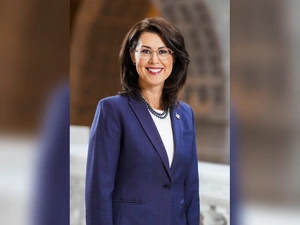
Caption: Official 2023 portrait of Utah Lieutenant Governor Deidre Henderson. Credit: Cabin1949 / CC0 1.0, via Wikimedia Commons.
A federal court dismissed the Justice Department’s voter-data lawsuit against Utah’s Republican lieutenant governor, Deidre Henderson, on October 23, adding another ruling to a nationwide dispute over access to private registration records. Henderson had refused to hand over the state’s unredacted voter rolls, saying federal and state privacy obligations limited what she could disclose.
U.S. District Judge David Barlow ruled that the federal statute cited by the Justice Department did not entitle it to Utah’s complete electronic voter database. Henderson, a Republican, had resisted the demand from a Republican administration.
Why the judge dismissed the demand
Federal officials sought electronic registration lists containing identifying information such as birthdates, driver’s-license numbers, partial Social Security numbers and contact details. The Justice Department invoked Title III of the Civil Rights Act, which requires certain election records to be available for federal inspection. Judge Barlow held that the state’s voter database was not the kind of record covered by the provision as pleaded, and dismissed the suit. The court also denied the department’s motion to compel the records.
Henderson offered Utah’s current public voter-registration list instead. She maintained that turning over the restricted information would violate legal protections for the people whose names appear in the database.
The correspondence became contentious. According to a detailed New Yorker report published October 25, federal officials proposed an agreement under which Utah would receive findings about supposed problems in its rolls and have 45 days to correct them. Henderson also objected to a request that details of the proposed arrangement be kept confidential.
A series of cases across the states
Utah was one of many jurisdictions resisting federal demands. A University of Wisconsin Law School tracker reported that the Justice Department had filed cases against 30 states and Washington, D.C. as of October 22. State officials raised questions about federal authority, privacy laws and the treatment of sensitive personal records.
The legal results have varied in detail, but many district courts have rejected federal demands. A separate nationwide ruling on October 9 vacated a policy the department used in efforts to obtain state voter information; that dispute is on appeal. The Utah dismissal is an individual case with its own procedural history.
What the official says was at stake
Henderson has described threats directed at her as a consequence of resisting federal election demands. The New Yorker reported that she previously received state protection following threats connected to her position on election claims, and that similar concerns recurred later.
The Trump administration says its larger initiative is aimed at election integrity and improper registration. Critics and resisting state officials say federal requests reach beyond what the law permits and risk exposing voters’ private details. The court outcomes determine what the government may compel, not whether election-list maintenance itself is legitimate.
The case is dismissed, but the dispute is wider
The ruling against the Justice Department in Utah does not automatically end its cases elsewhere, and the department continues to litigate voter-data access questions in other jurisdictions. It is also separate from the urgent California lawsuit over whether specific ballots can be set aside during the current election.
For Henderson, the October 23 order dismisses the Justice Department’s suit. Similar voter-data demands remain contested in other states.
References: The United States of America v. Henderson, Document 68 | The State Officials Defending the Midterms from the President | Tracker: DOJ Lawsuits Seeking States’ Sensitive Voter Data

AI-Assisted Content
The News And Beyond team was assisted by generative AI technology in creating this content.
Trending



NASA Tracks a Giant Star Swallowing Its Smaller Neighbor
Astronomers have reconstructed a rare cosmic event in which a giant, aging star swallowed a...
Erin Calloway


Renters Have Until January 29 to Claim Part of a $359.9 Million Fund
A $359.9 million settlement fund in a major apartment-rent antitrust case is open for claims,...
Daniel Reeves
Navy Federal Fraud-Loan Settlement Offers an Extra $250 Claim
Some Navy Federal Credit Union members whose personal loans were disputed as fraudulent may qualify...
Alex Mercer

Blink-182's Mark Hoppus Won His Tree Fight. He Still Wants $681,000
Caption: Mark Hoppus performing at the 2020 ALTer EGO concert. Photo: Justin Higuchi / Wikimedia...
Emily Carter

Hilary Swank, Pregnant at 52, Tells Critics to Get With the Times
Caption: Hilary Swank at the 2015 Tokyo International Film Festival. Photo: Dick Thomas Johnson /...
Susan Blake


The Map That Named America Goes on Display in Washington
A piece of the 1507 world map that first put the name “America” on a...
Erin Calloway

A Judge Blocked Groundbreaking on Trump's 250-Foot Arch
President Donald Trump's proposed 250-foot memorial arch has won a key federal planning approval, but...
Erin Calloway


Florence Pugh Turns 30, Faces Surgery Rumors, and Fires Back
Caption: Florence Pugh at the 2024 Toronto International Film Festival. Photo: Frank Sun / WikiPortraits...
Emily Carter

Health Savings Limit Rises to $9,000. Medicare Can End Your Contributions
Americans with qualifying health insurance will be able to contribute up to $9,000 to a...
Laura Bennett

NASA's Voyager 1 Is Now a Full Light-Day From Earth
NASA's Voyager 1 spacecraft has reached a distance so vast that a radio signal traveling...
Thomas Hale